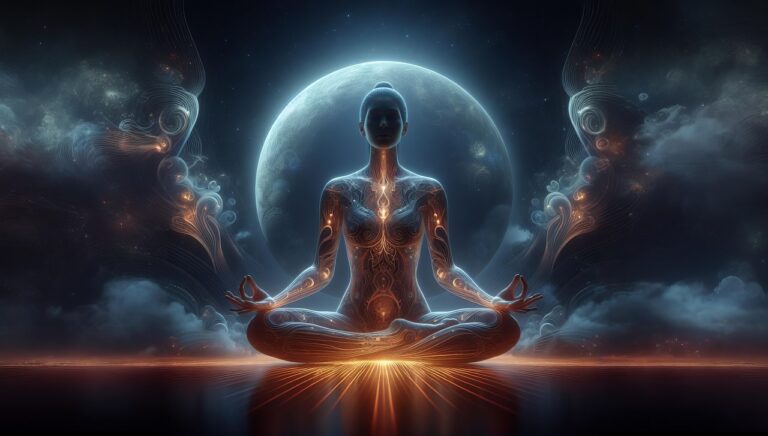
A Return, Not an Escape
Divine Search – Post 1
Salvation in Hindu Thought — A Return, Not an Escape
By Ashok Chhabra | AshokChronicles
In Hindu philosophy, salvation — known as moksha — is not a dramatic rescue from the world. It is a quiet homecoming. A return from illusion to truth, from ego to essence, from separation to unity.
Moksha represents freedom from the cycle of birth and rebirth (samsara) and the profound realization that the individual soul (Atman) is not separate from the Supreme Reality (Brahman).
This understanding gives Hindu thought its uniquely gentle depth: liberation is not about being saved from sin — it is about awakening from forgetfulness.
🌿 The Core Insight: The Soul Is Already Divine
Unlike traditions that center heavily on guilt and punishment, Hindu wisdom begins with a more compassionate premise: the soul is inherently pure.
The problem is not that we are broken.
The problem is that we have forgotten who we truly are.
Over time, we begin to identify ourselves with:
-
the physical body
-
the restless mind
-
social roles and identities
-
temporary successes and failures
This mistaken identity creates attachment, fear, and repeated cycles of experience. Thus the soul continues its journey through many lifetimes — not as punishment, but as unfinished learning.
In this light, moksha is not an external reward. It is the end of confusion.
🔄 Samsara: The Cycle That Continues
Hindu thought describes worldly existence as samsara — the ongoing cycle of birth, death, and rebirth.
This cycle continues as long as:
-
desires remain unfulfilled
-
attachments remain strong
-
ignorance of the true Self persists
Each lifetime becomes an opportunity to learn, refine, and move closer to clarity.
When true knowledge dawns — not intellectual knowledge, but lived realization — the cycle naturally loosens its grip.
This is liberation.
🧘 The Four Classical Paths to Moksha
One of the most inclusive features of Hindu philosophy is its recognition that human temperaments differ. Therefore, multiple authentic paths are offered.
1. Jnana Yoga — The Path of Knowledge
Jnana Yoga dissolves illusion through deep inquiry and discrimination.
The seeker repeatedly reflects:
-
Who am I, beyond body and mind?
-
What is permanent, and what is temporary?
-
What is the witness behind all experience?
Through sustained inquiry, false identification gradually falls away, revealing the Self.
2. Karma Yoga — The Path of Selfless Action
Karma Yoga teaches action without attachment to results.
Here, the seeker:
-
performs duties sincerely
-
serves others selflessly
-
offers outcomes to the Divine
Over time, this purifies the ego and reduces the binding force of karma. Action continues — but inner bondage weakens.
3. Raja Yoga — The Path of Meditation
Raja Yoga focuses on mastery of the mind through disciplined meditation.
When the mind becomes still:
-
thoughts slow
-
reactions soften
-
awareness deepens
In that inner silence, the seeker directly experiences the deeper Self beyond mental noise.
4. Bhakti Yoga — The Path of Devotion
Bhakti Yoga melts the ego through love and surrender.
Through prayer, chanting, remembrance, and heartfelt devotion, the sense of separateness gradually dissolves. The devotee does not argue with the ego — he or she lovingly outgrows it.
For many, this is the most emotionally accessible path.
🪔 Where All Paths Converge
Though the methods differ, the destination is one.
All authentic paths ultimately reveal the same quiet truth:
-
You are not merely the body.
-
You are not the restless mind.
-
You are not the roles you temporarily play.
You are the eternal witness — the Atman — already rooted in the Infinite.
Moksha is simply the moment this is no longer a concept but a living reality.
🌅 Final Reflection: Liberation as Remembrance
Salvation in Hindu thought is not an escape from life. It is a shift in understanding.
Nothing new is added.
Nothing artificial is achieved.
Nothing external is imported.
Instead, something false gently falls away.
When ignorance dissolves, what remains is what was always present — quiet, aware, and free.
Salvation is not somewhere else.
It is the moment you remember who you truly are.