


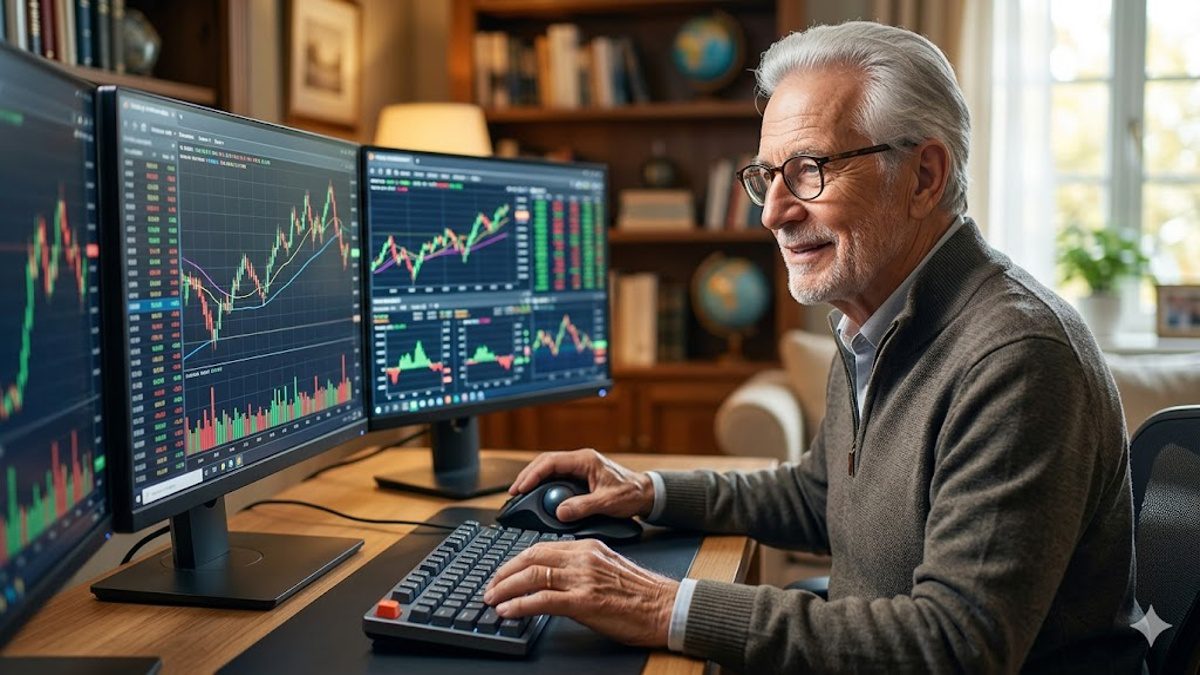
Trading for Mental Agility
Trading is often viewed purely through a financial lens, but for those navigating the later stages of life, it can serve as a powerful tool for cognitive preservation. Engaging with the markets requires a unique blend of analytical thinking, emotional regulation, and rapid decision-making—all of which are essential for maintaining a sharp, agile mind.
Why Trading Boosts Cognitive Health
Unlike passive hobbies, trading demands active engagement with complex, shifting data. Here is how it challenges the brain:
-
Pattern Recognition: Analyzing charts and market trends forces the brain to identify sequences and anomalies, strengthening neural pathways associated with logic.
-
Information Processing: Traders must synthesize news, economic reports, and price action in real-time, improving the speed of mental processing.
-
Risk Assessment: Evaluating the probability of success versus potential loss keeps the “executive function” of the brain—the part responsible for planning and problem-solving—highly active.
-
Emotional Resilience: Managing the “fear and greed” cycle of the markets requires significant self-discipline, which helps maintain emotional balance and focus.
Strategic Approaches for Seniors
The goal here isn’t necessarily to become a high-frequency day trader, but rather to use the market as a “mental gym.”
| Strategy | Mental Benefit | Risk Level |
| Dividend Investing | Focuses on long-term research and patience. | Low |
| Swing Trading | Encourages technical analysis over several days/weeks. | Moderate |
| Paper Trading | Practice without real money; focuses purely on the “game.” | Zero |
Important Considerations
While the mental benefits are significant, it is vital to approach trading with a grounded perspective:
-
Start Small: Only use capital that you can afford to lose. The goal is mental stimulation, not financial stress.
-
Continuous Learning: Use resources like Rank Math SEO (if blogging about your journey) or financial news portals to stay informed.
-
Set Boundaries: Limit screen time to avoid fatigue. Mental agility is built through quality sessions, not quantity.
Note: Trading involves significant risk. It is always wise to consult with a financial advisor before making any investment decisions, especially during retirement.