Active Longevity: Moving Beyond Managing Decline
Active Longevity: Moving Beyond Managing Decline
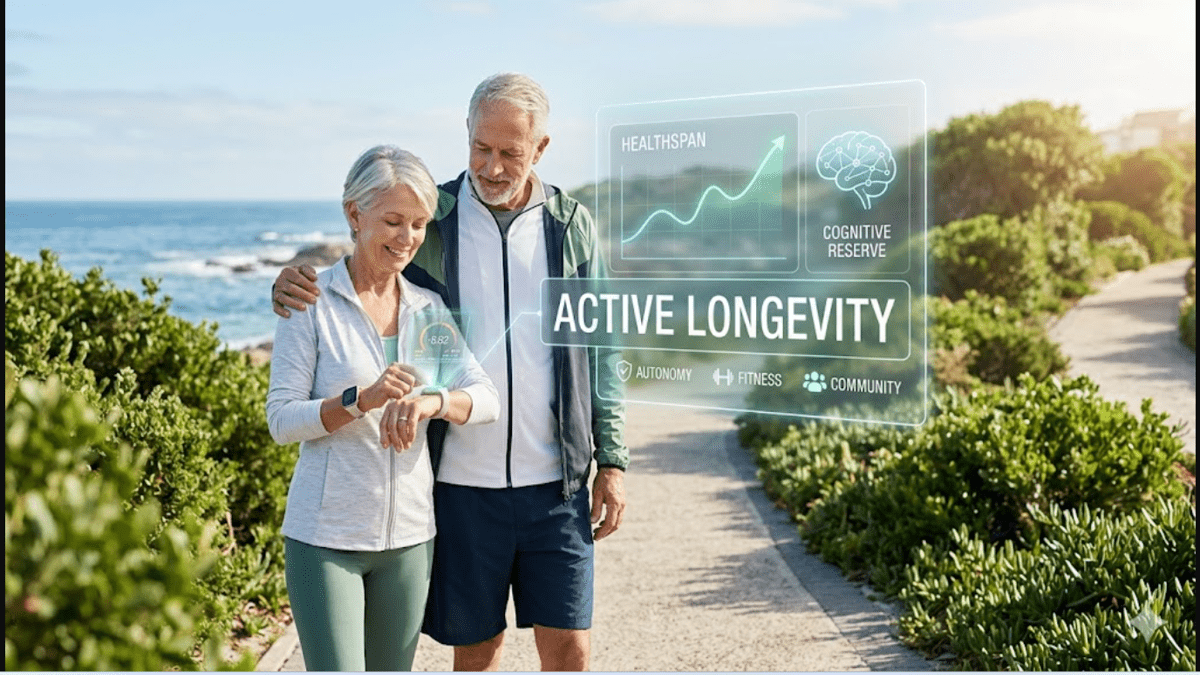
In 2026, the conversation around “aging” has undergone a profound shift. What was once framed as the clinical management of “elderly persons” has evolved into the dynamic pursuit of Active Longevity. The modern retiree is no longer asking, “How will I be cared for?” but rather, “How can I optimize my autonomy, maintain my cognitive edge, and ensure my wealth outlives my biology?” This new chapter of life is defined by four intersecting pillars:
1. The Shift from Lifespan to Healthspan
The defining query of the current generation is no longer how to live longer, but how to live better. In 2026, the term “Healthspan”—the period of life spent in good health, free from chronic disability—has replaced simple life expectancy as the primary metric of success.
-
Preventive Brain Health: Seniors are utilizing AI-driven programs to build “cognitive reserve,” combining neuroplasticity exercises with social engagement to stave off memory decline.
-
The “Biohacking” of Aging: There is a surge in interest regarding metabolic health. Queries often revolve around “epigenetic clocks” and the use of lifestyle interventions like resistance training to maintain muscle mass.
-
Aesthetics of Vitality: The phrase “anti-aging” is fading, replaced by “aging well,” where the goal is authenticity and strength rather than a chase for youth.
2. Autonomy through Technological Integration
The modern fear of dependency is being addressed through what experts call “Technological Autonomy.” The goal is Aging in Place—staying in one’s own home by leveraging a smart ecosystem.
-
The Ambient Home: Today’s seniors use integrated sensors to detect falls without the need for wearable buttons, and AI assistants to manage medication schedules.
-
Telehealth 2.0: Healthcare has moved from the clinic to the living room. Remote diagnostics allow for real-time monitoring of vitals, ensuring intervention happens before a crisis occurs.
-
Robotic Companionship: For those living alone, AI-powered companions provide emotional engagement, helping to bridge the gap for “solo agers.”
3. Financial Resilience in the “Silver Economy”
With the prospect of living to 90 or 100, “outliving one’s money” remains a top-tier anxiety. However, the approach to solving this has become more sophisticated.
-
Rethinking Retirement: The binary switch from “work” to “non-work” is disappearing. Many are opting for “bridge careers” that allow for part-time, purpose-driven work that supplements income.
-
The Longevity Gap: Modern financial planning now emphasizes “Financial Fitness as Self-Care,” moving away from passive saving toward active asset management that accounts for late-life healthcare inflation.
4. Purpose, Legacy, and the “Solo Ager”
Loneliness is now treated with the same medical urgency as physical illness. As traditional family structures shift, the search for community has become more intentional.
-
Intergenerational Living: A rising trend involves seniors and younger generations sharing living spaces. This provides seniors with a sense of “social utility” and younger people with mentorship.
-
Digital Legacy: Beyond physical assets, people are managing their “digital footprints.” Digital executors ensure that a person’s values and memories are preserved via AI for future generations.
Conclusion: A New Script for the Future
The modern senior is a navigator, not a passenger. By shifting the language from dependency to autonomy, and from lifespan to healthspan, we are rewriting the script of what it means to grow old. The future is no longer a period of winding down; it is a “Silver Era” of continued growth, contribution, and personalized vitality.